
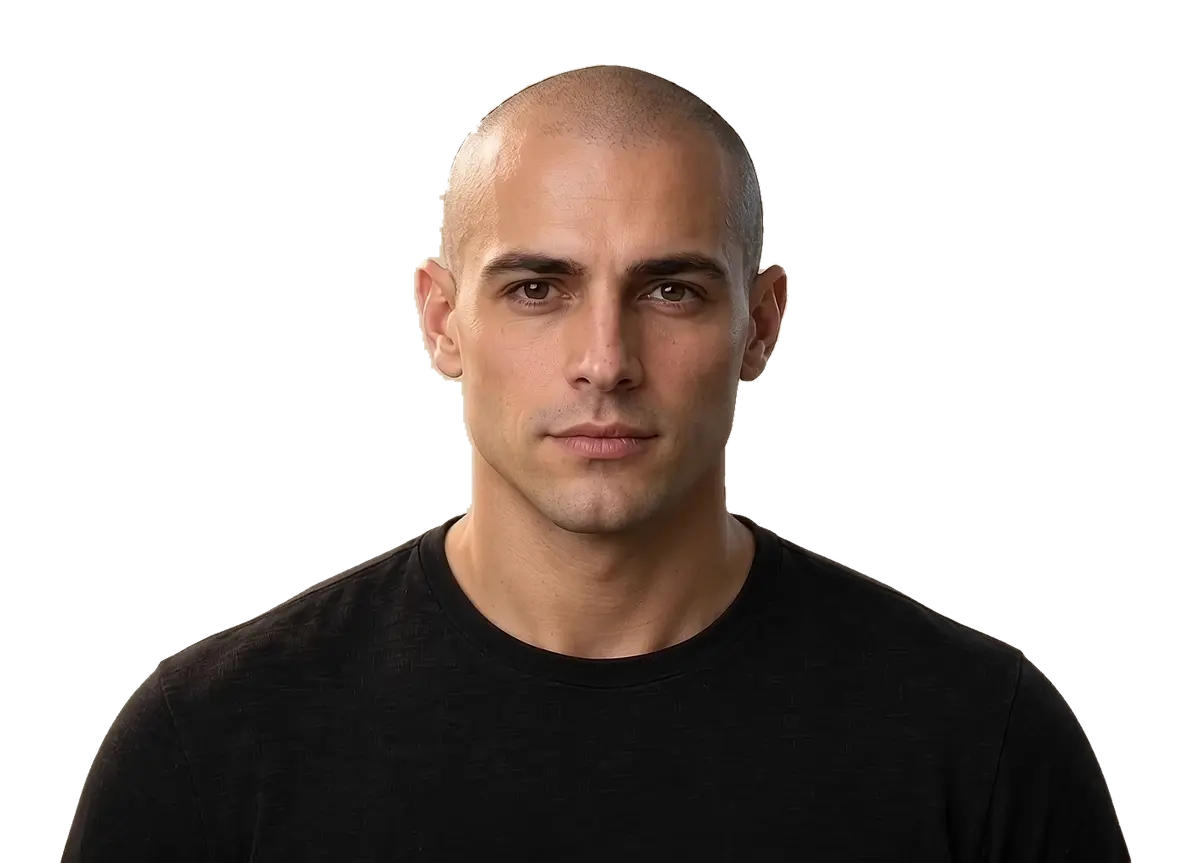
Start with the whole picture.
Dr. Atul hears your concerns and history, then examines your hair and donor area. The first discussion covers what is possible, including whether you need surgery at all.
Talk before any graft count
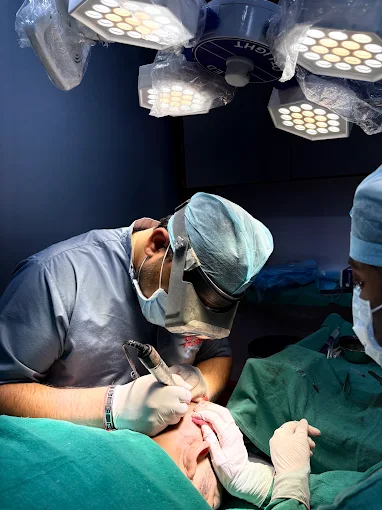
You’re thinking about your hair.
We’re thinking about your
future, too.
Hair restoration with Dr. Atul Bhanu Singla. Planned around your face, your donor reserves, and the years ahead.
↳ Fits your face
Saves donor hair
Plans for later
Straight answers
Planning starts with an assessment of you. Your age, the shape of your face and how your hair is likely to change decide what is realistic.
Surgery is one possible answer. Sometimes medicine, a plan in stages or waiting is the better choice.
The assessment comes first, then the technique.
Read the options, then decide with Dr. Atul.
A transplant moves hair follicles from the back of the head to the thinning areas. FUE is a way of taking grafts out one at a time, and DHI is a way of putting them in. Your assessment decides which fits.
Explore hair transplantationDr. Atul finds the cause of your hair loss first. Depending on it, he may suggest medication, PRP or other treatment. How well each one works varies from person to person.
Explore medical treatmentIn a beard or eyebrow, each graft has to match the angle and direction of the hair around it. Your current pattern and your donor hair decide what is possible.
Explore facial hair restorationEvery treatment has limits and risks. A consultation tells you whether it suits you.
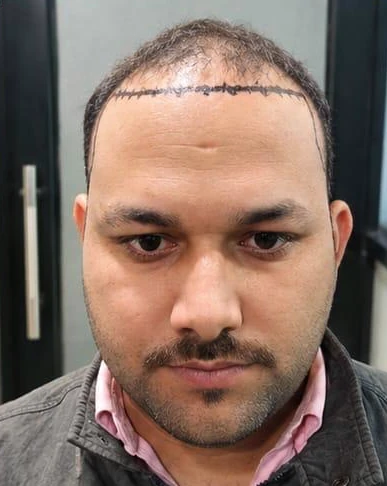
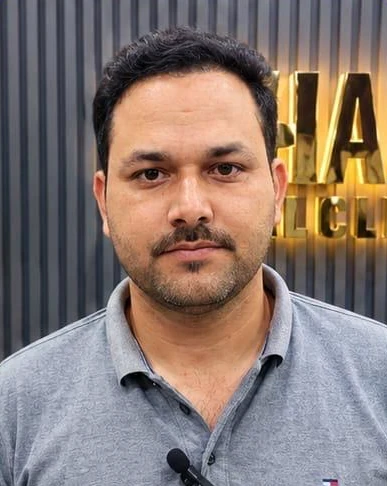
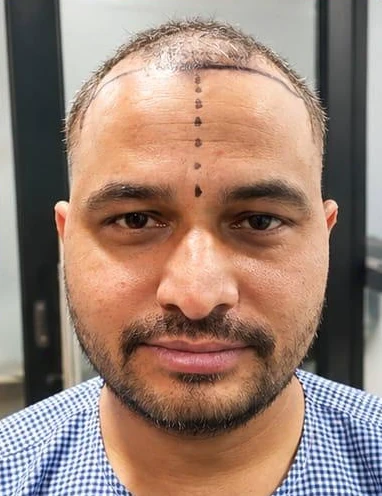
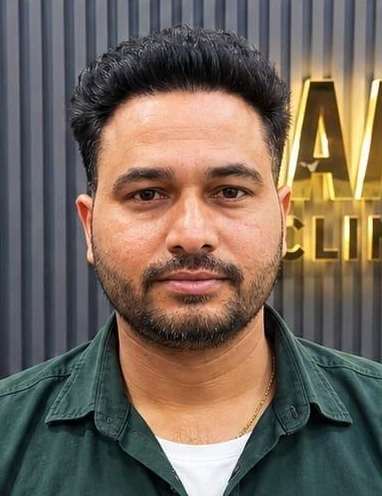
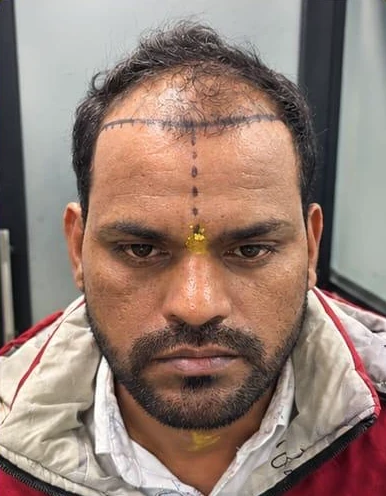
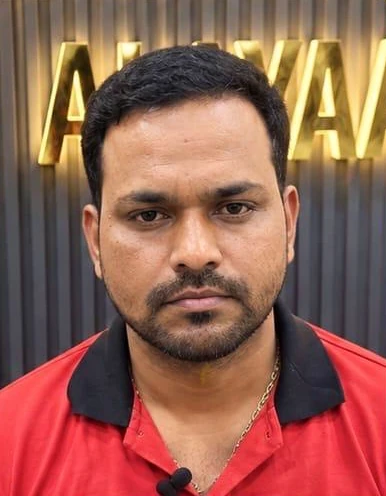
Photographed before treatment and at follow-up, shown as taken. Drag the line across each face to compare.


Every result is different. A consultation tells you what is realistic for your hair.
Dr. Atul hears your concerns and history, then examines your hair and donor area. The first discussion covers what is possible, including whether you need surgery at all.
Talk before any graft countIf surgery is right for you, you agree where the hairline goes, which areas come first and how much donor hair to keep. You see the design and its limits before you agree to it.
Face · donor · futureAsk which technique he proposes, who does each step and what happens on the day.
Know the plan and the peopleFollow your aftercare instructions, come to the agreed checks and keep Dr. Atul’s number close. If something looks wrong early on, ask him.
Written aftercare and a number to callHair grows back slowly, and the first months do not show the final result. Review visits let you compare progress and raise concerns.
Regular review visitsYour own hair may keep changing. Ask about ongoing care, later reviews and how to keep options open after the first treatment.
Follow-up after treatment
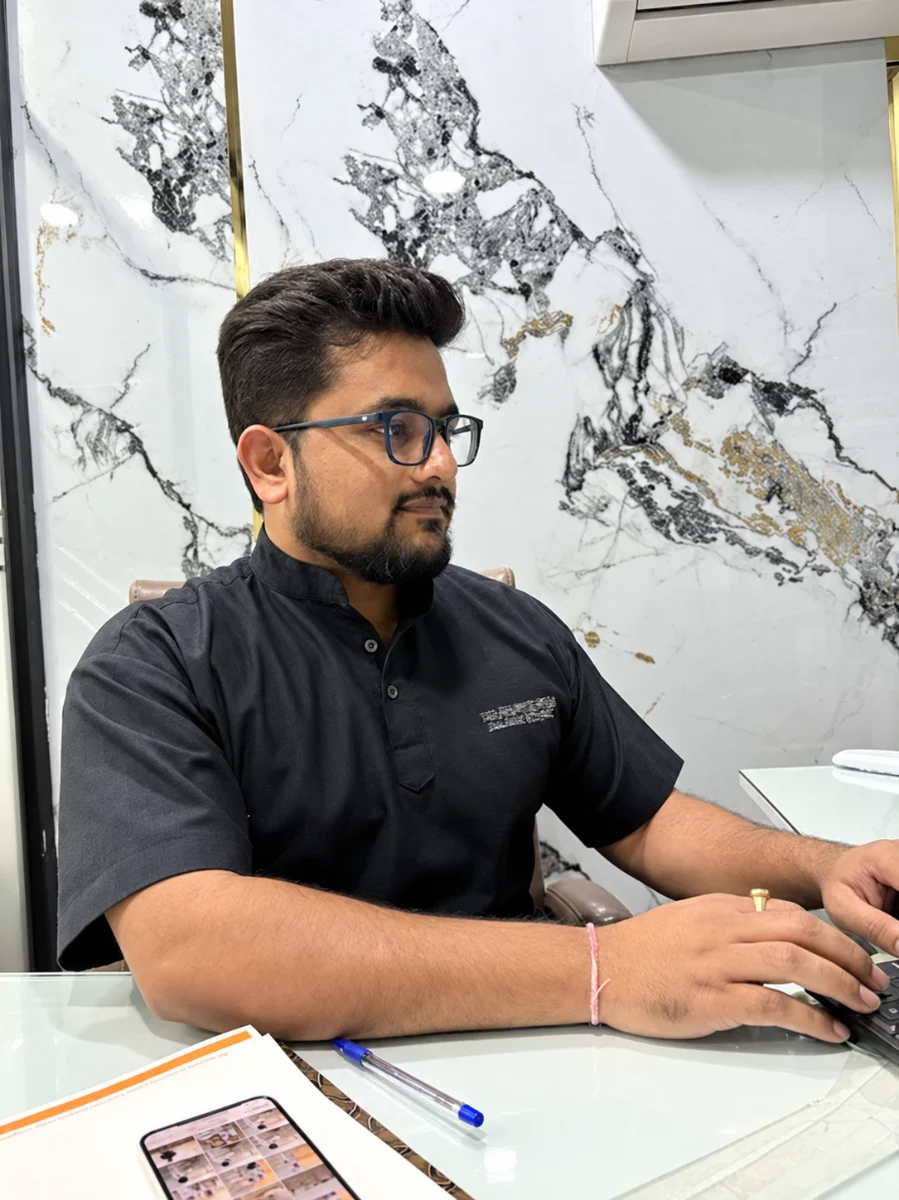
Dr. Atul starts with you: what matters to you, what your donor hair allows and what to plan for later.
Consultations in Chandigarh cover surgery and medical treatment, with time to ask why he recommends what he does.
Meet Dr. AtulAsk Dr. Atul about travel, your stay in Chandigarh and follow-up once you are home.
You don’t need to have it all figured out before we talk.
An assessment should identify the cause of your hair loss and review donor hair, progression, and expectations. Surgery may not be appropriate, and medical treatment or observation may be discussed first.
No. Donor hair is finite. The plan should balance coverage, density, and preserving donor reserves. A number on its own does not tell you whether a design is right for you.
The aim is a design that considers your age, features, and future hair loss. Native hair can continue to thin, and results vary. Discuss long-term management and the possibility of further treatment during your consultation.
Transplantation typically uses local anaesthesia. Soreness, swelling, and scabbing can follow. Risks include infection, bleeding, scarring, and poor graft growth. Ask for written aftercare and a contact for unexpected symptoms. Your doctor will advise when to return to work and exercise.
Transplanted hairs often shed initially. New growth usually becomes noticeable after several months, and full results may take 10–18 months. Individual timelines and results vary.
Cost depends on your assessment, the treatment selected, and the extent of work. Ask for an individual written estimate, including what follow-up, medication, and any additional care will cost.
Yes. Contact Dr. Atul to arrange a virtual consultation, including if you live outside India. An in-person assessment may still be needed before confirming suitability and a final treatment plan.
No need to choose a procedure today.
Let’s start with what’s
on your mind.